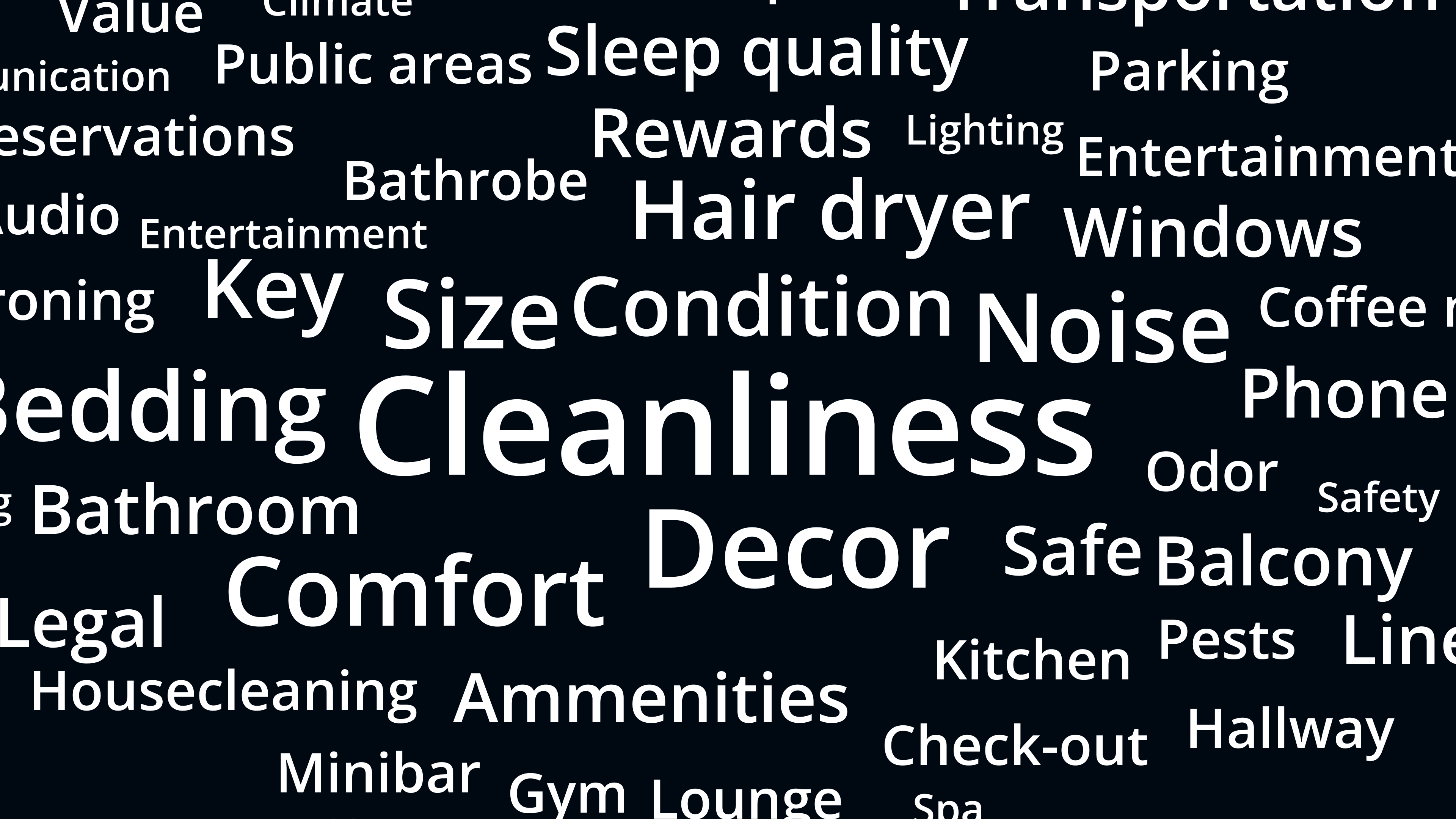
One of our main value propositions was falling flat, so we needed to evolve with the times.
As one of our main value propositions, Text Analytics has been an important part of our platform for quite some time. It allows our customers to analyse their reviews from around the web — all in one place.
However, two versions of Text Analytics currently exist in our platform. Built over 8 years ago, the first version shows a word cloud based on the number of times a word is repeated. The most repeated words rank the highest and give our customers a simple overview of what their customers are saying.
The second version, built in mid-2021, used a machine learning algorithm to rate a topic as positive or negative based on the surrounding wording. This provided customers with a much more in-depth analysis. However, this was only available for select customers since each industry and language needed to be set up separately.
This lead to both versions staying live, meaning that instead of bringing increased analytical sophistication to all our customers, we really only increased the complexity of our offering. With the democratisation of AI and specifically natural language processing, we decided to create an all-new version that would take the best of the existing versions while using the newest technology.
Connecting to the Review Stream
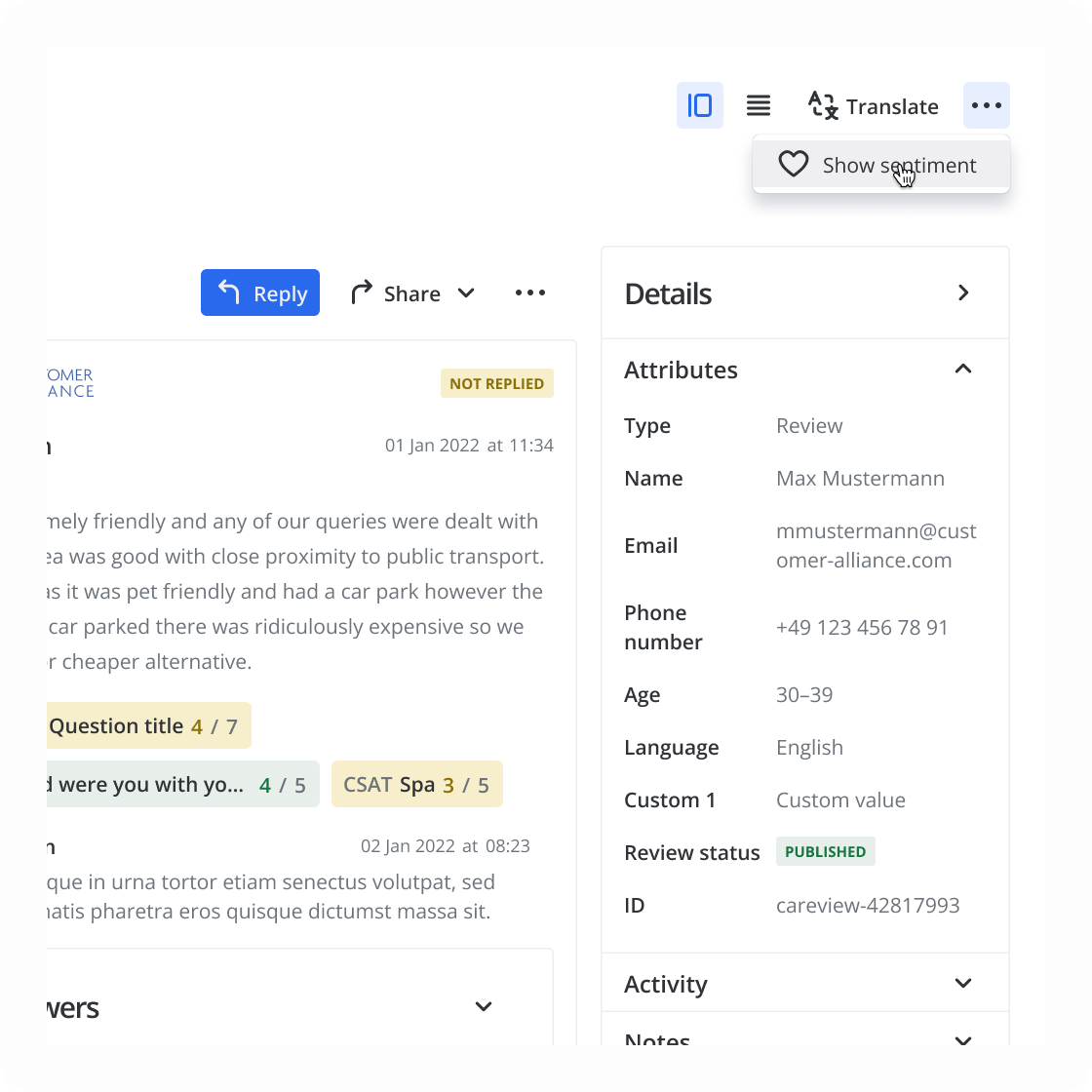
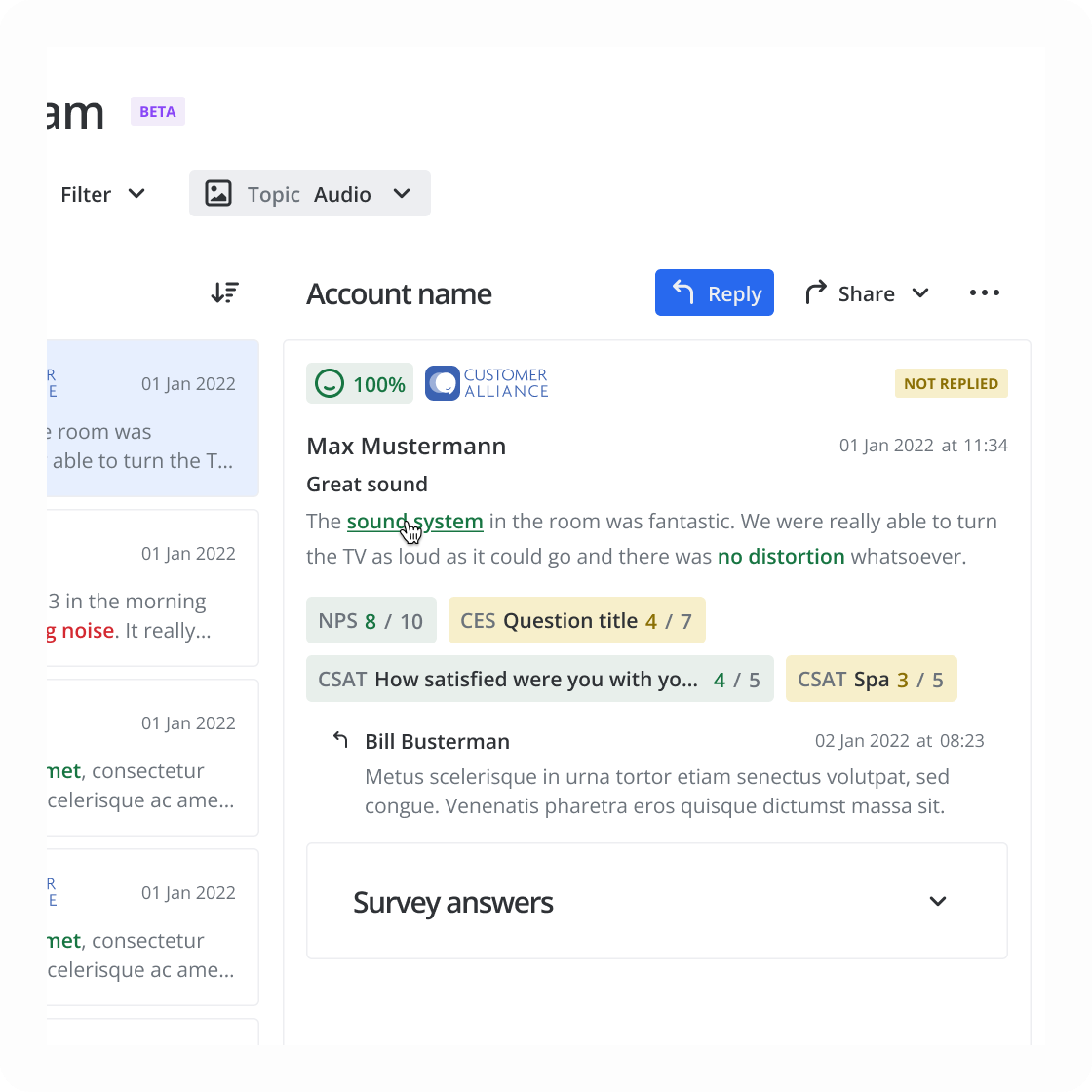
The first improvement I made was to connect Text Analytics to the Review Stream. In both previous versions, these had been completely separate features, even though both displayed essentially the same list of reviews. By creating deep links between the two features, I was able to increase the navigability of the platform while at the same time allowing engineers to remove a huge chunk of code that was no longer necessary.
With this set up, I designed a way to highlight the polarity of topics within the Review Stream, making it easier to understand the sentiment of each review, especially when reading hundreds of reviews a day.
A granular point system
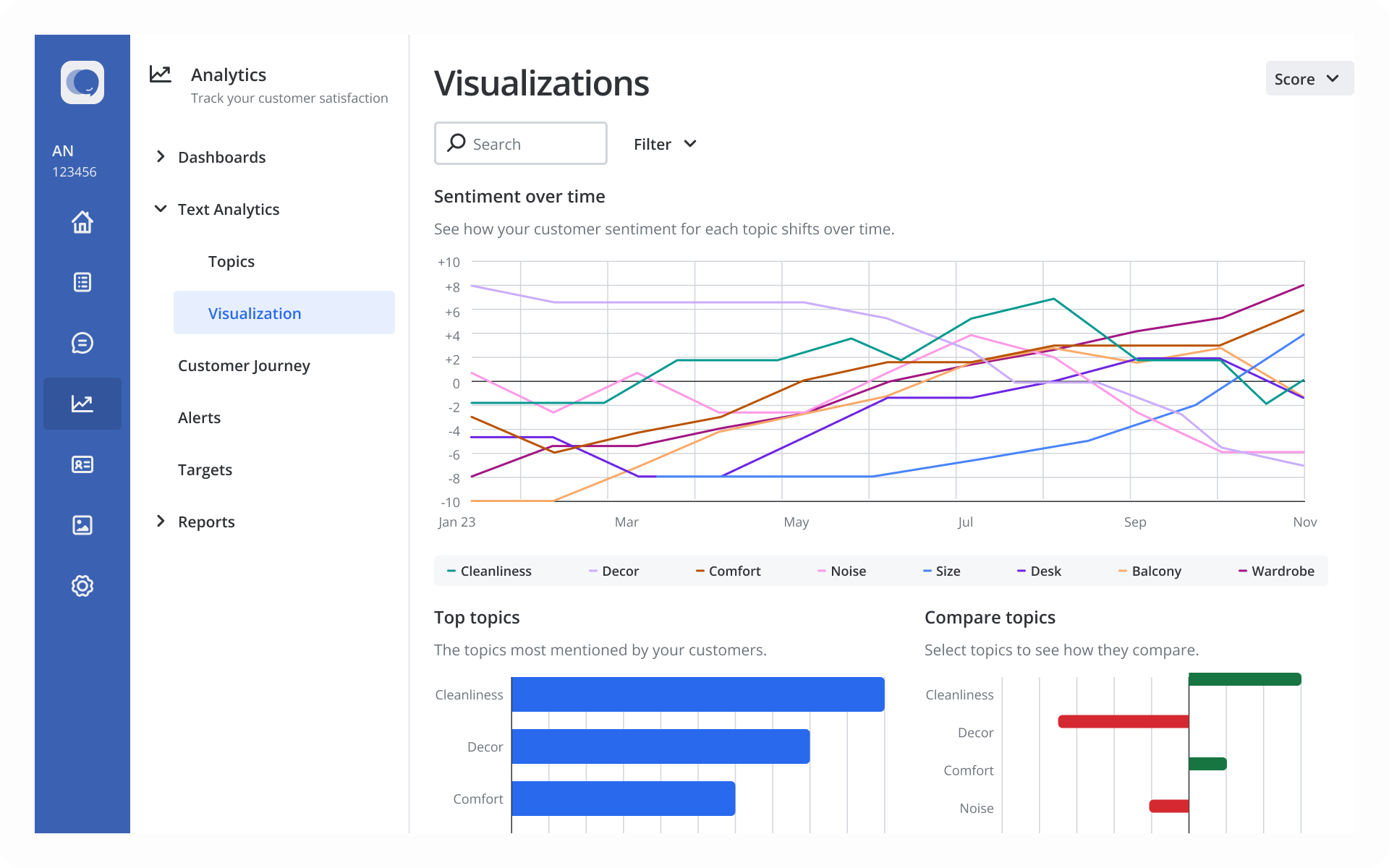
Instead of using the number of times a word was mentioned as the basis for analysing text, I decided to use natural language processing to rank topic mentions on a scale of -10 to +10 based on the emotion of the surrounding words. For example, a mention stating “the audio on the TV was terrible” could be rated -8 while a mention stating “the TV audio was too quiet” could be -2. This provides a much more granular approach to the text analysis, giving customers higher quality data with which to understand their customer satisfaction.
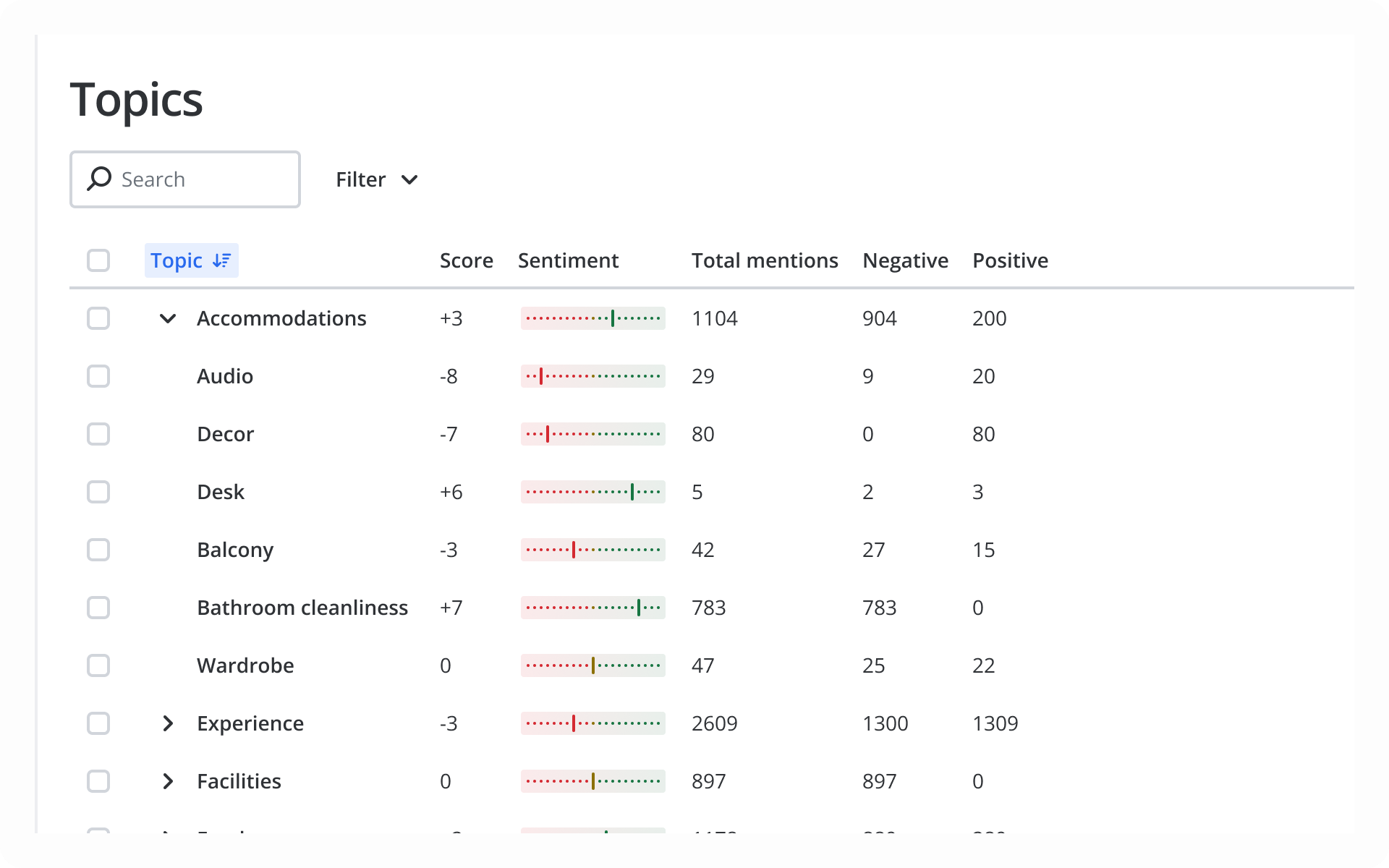
Better data visualisation
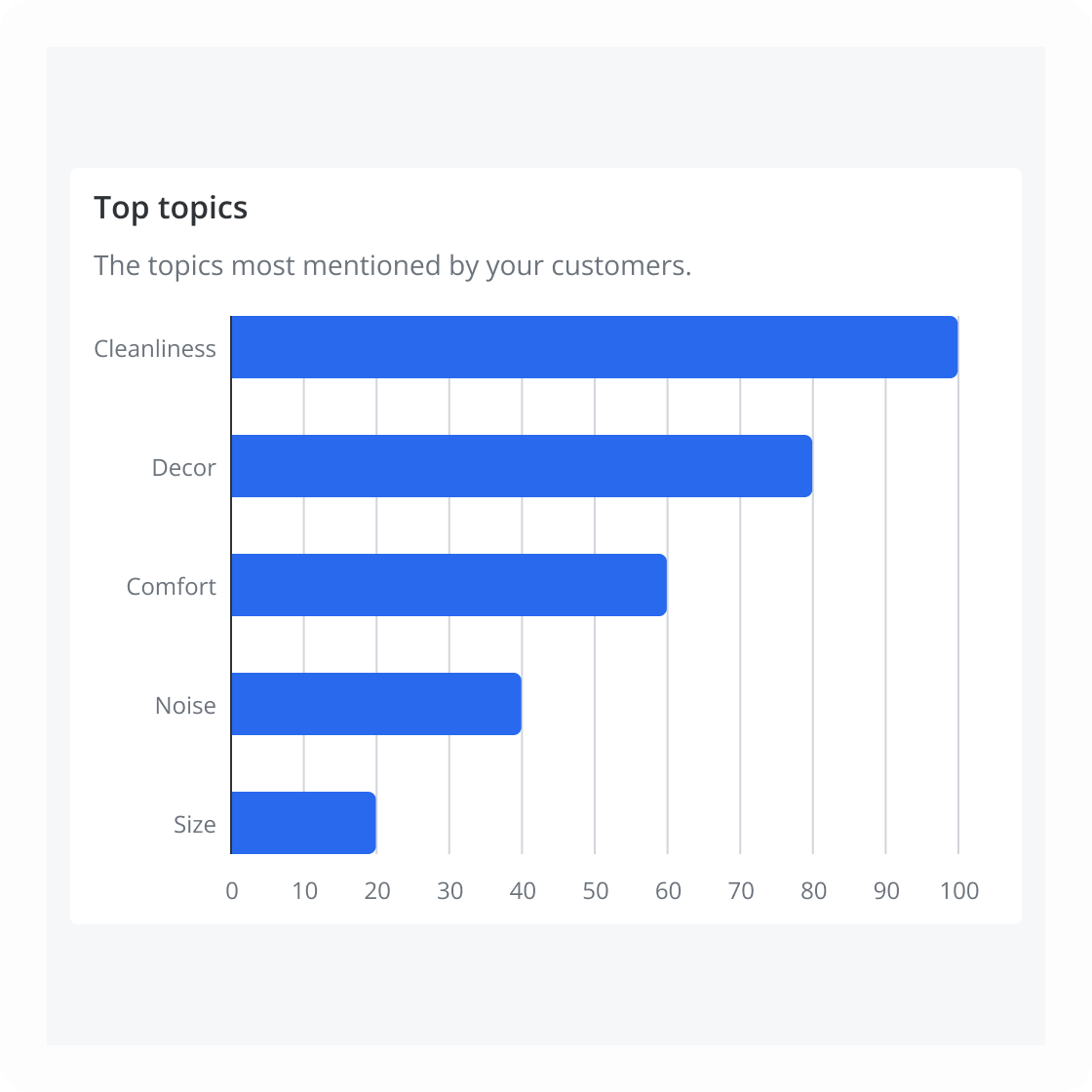
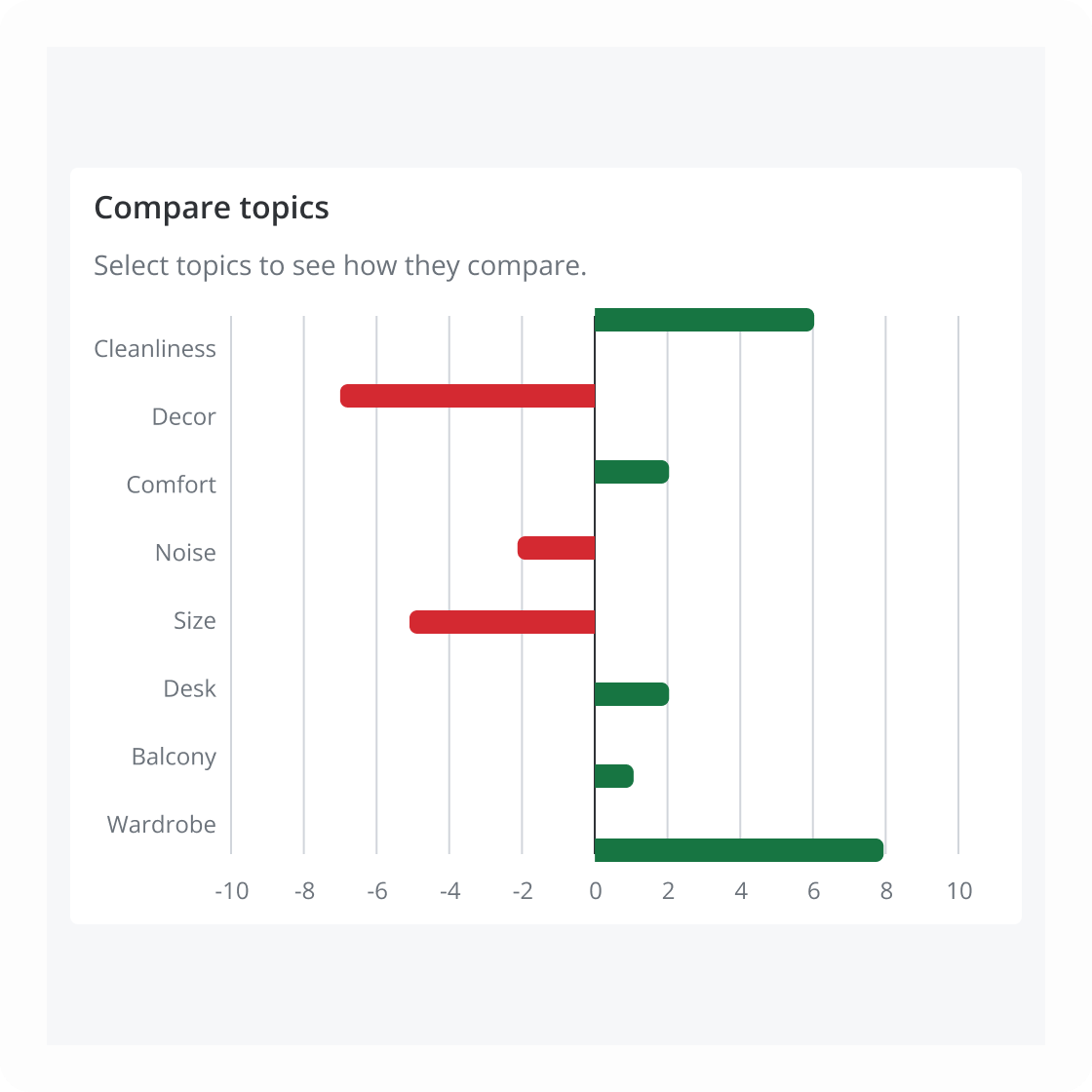
Many customers liked the original Text Analytics version because it used a word cloud to showcase the data. Lists were nice for customers of version 2 when they wanted to dive into the data, but charts gave a much better overview of the general trend.
I decided to bring both methods into the latest version so that our customers could choose what suited them best in the moment. It added a little more complexity to the final build, but allowed the engineering team to finally sunset the earlier versions for all of our customers, removing thousands of lines of complex code and business logic.
The future
Building out a new version of Text Analytics not only allowed us to make our product better and reduce backend complexity, but it also allowed us to showcase to our customers that we’re continuing to evolve and use the latest and greatest technology. Our customers depend on us to collect and analyse millions of reviews each month. Especially for our enterprise customers, saving any amount of time with better analytics is always among their top requests.
Our commercial teams have also been eager to use this update to push that we are once again on the technological forefront.