
How can we transition our hospitality-focused online reputation management platform to an industry-agnostic feedback management platform?
Hospitality was decimated during Covid and the broader economy is pushing business and individuals to spend less. In addition, since Customer Alliance first arrived on the market, online reputation management has become commoditised and no longer delivers the value it once did.
Coming out of Covid, we realised we needed to change tactics in order to grow in this new world. We would do this by refining our ORM features, doubling down on feedback, and opening up our platform to the broader market. As one of the oldest and most visited features, our Review Stream was the logical choice to rethink from the ground up.
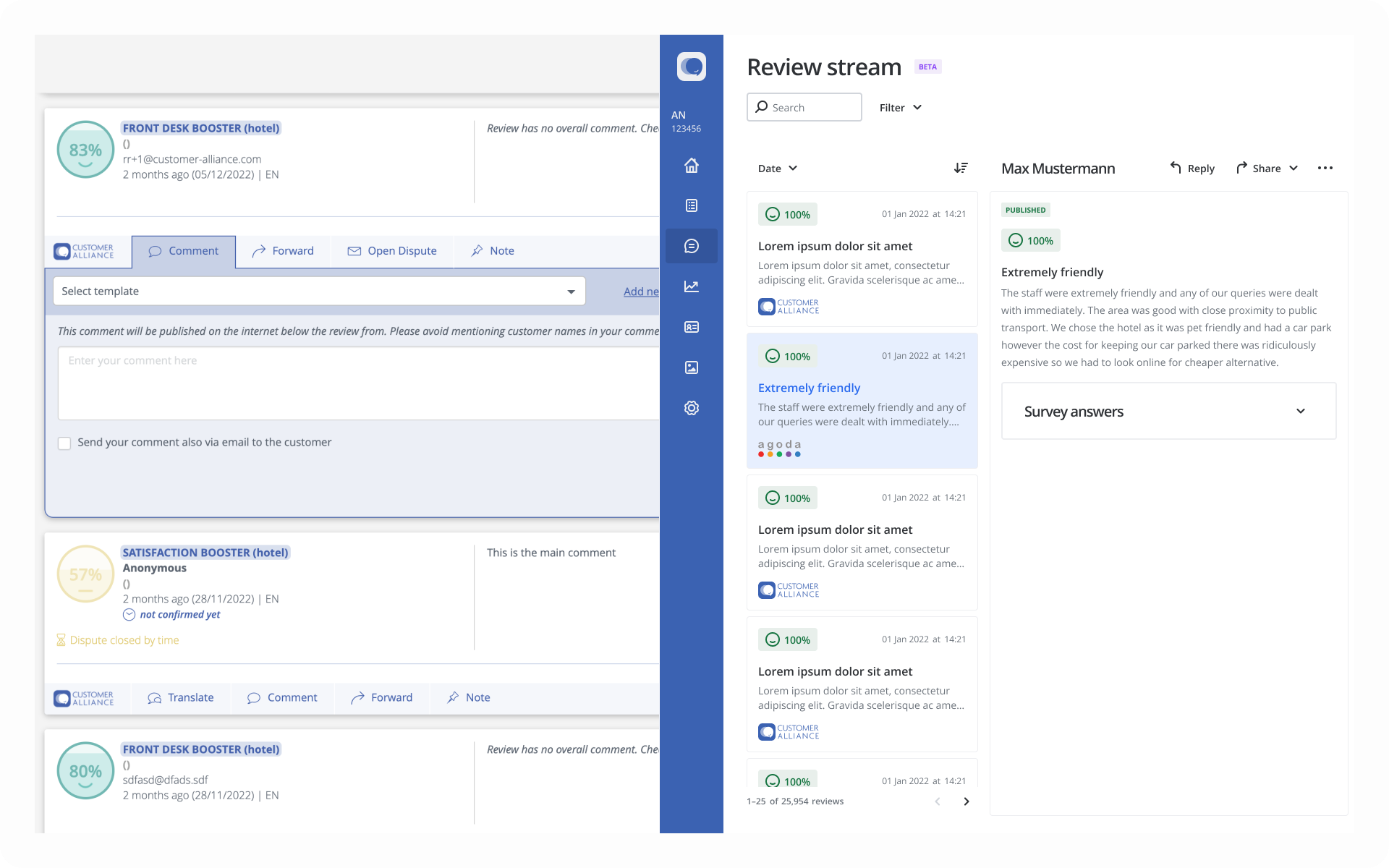
Our Review Stream
We collect reviews from across the internet and deliver them to our customers who are then able to analyse and take action on them in one place.
The structure of our Review Stream was close to a decade old, with only minor updates over the years. People were unable to find the most relevant reviews or filter for ones they still needed to respond to, context was often missing, and they were unable to collaborate well with colleagues.
Find what you need, forget the rest
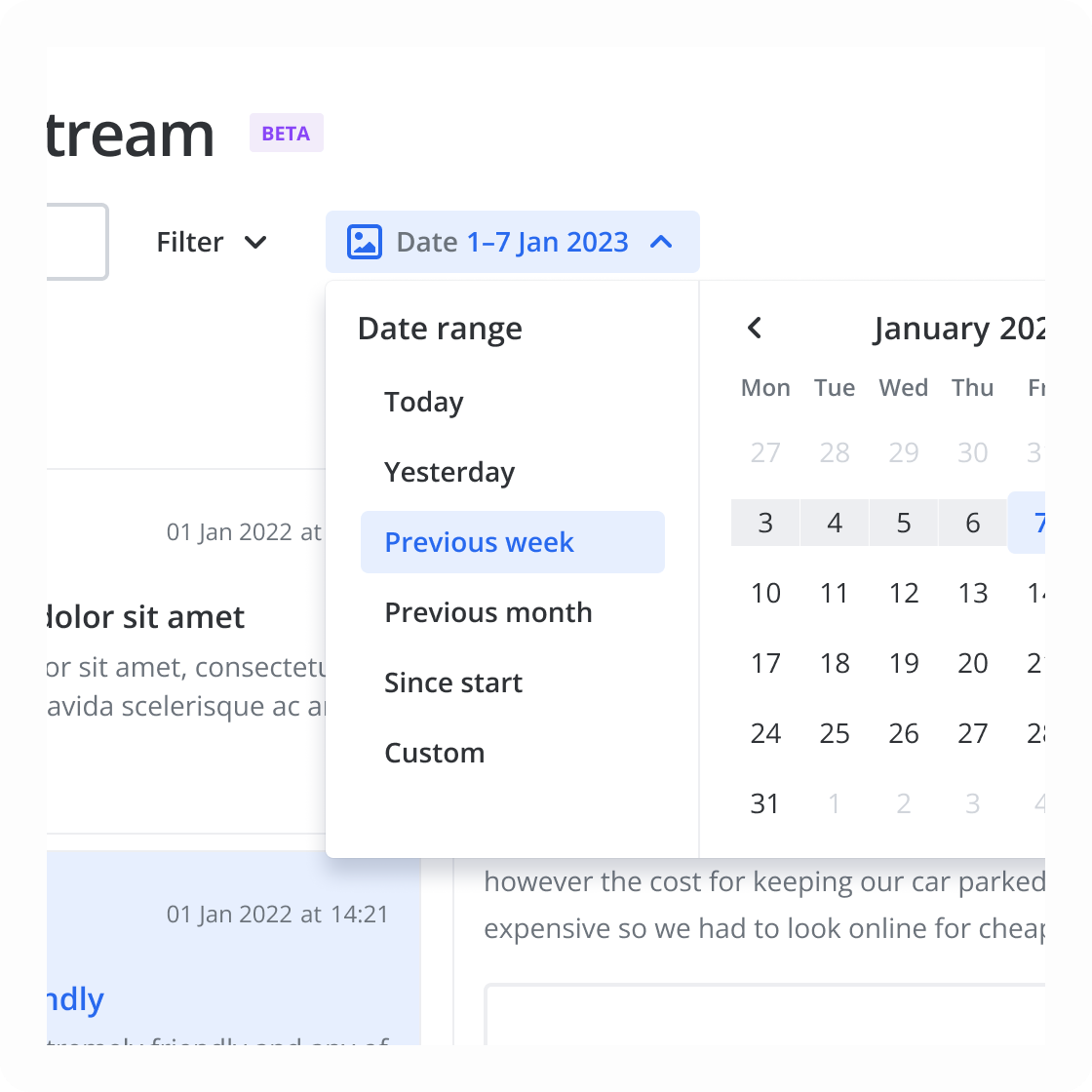
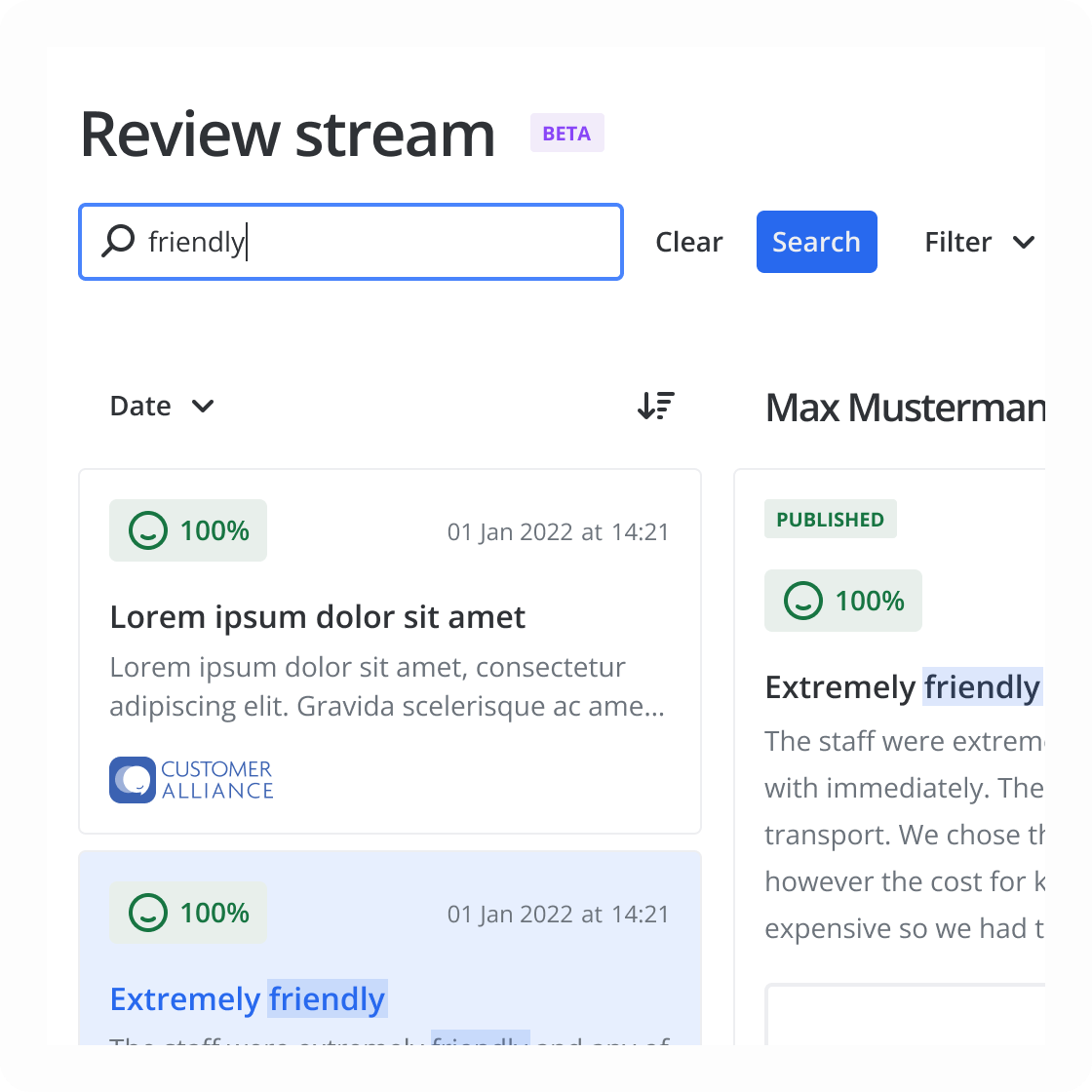
We knew that the millions of reviews that we collect in one place had a huge value for businesses, but we also heard from users that they were often overwhelmed and couldn’t find what they were looking for. I redesigned the filter and search to allow people to find what they needed as quickly as possible, while the rest faded into the background.
I worked with backend and frontend engineers to offer one search for all review data, progressive filters, and support for url parameters.
Everything in context
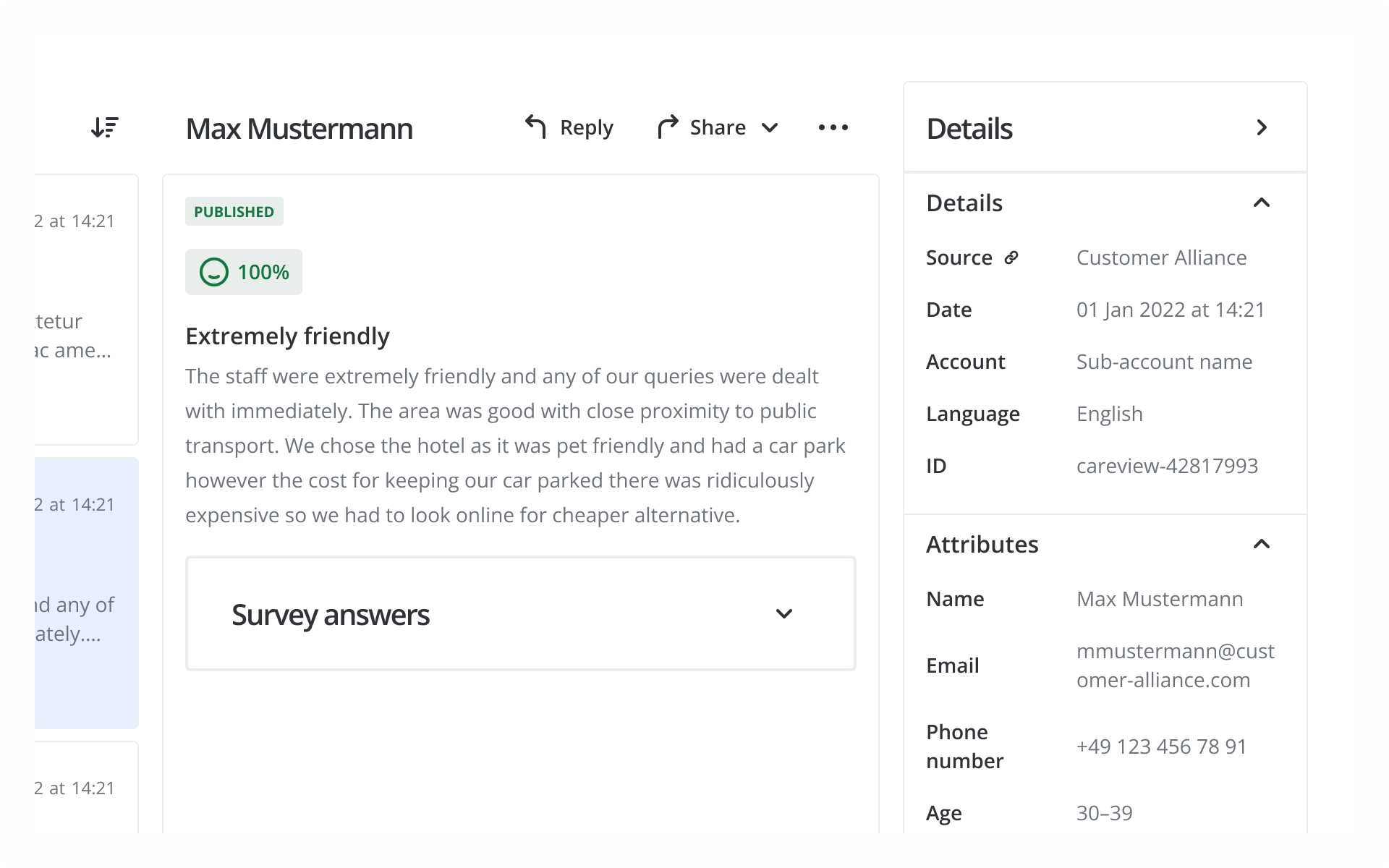
Reviews can come in many forms: one comment or several, number ratings, or even answers to multiple questions. In addition, our customers are able to add custom attributes to the data streaming in, providing unique context to each review. This information was already available to us on the backend, but was never surfaced to our users.
I created a details panel to house default and custom attributes which could be revealed or hidden based on individual preference, and brought context to survey answers by including questions and mirroring the survey order.
Collaboration at its core
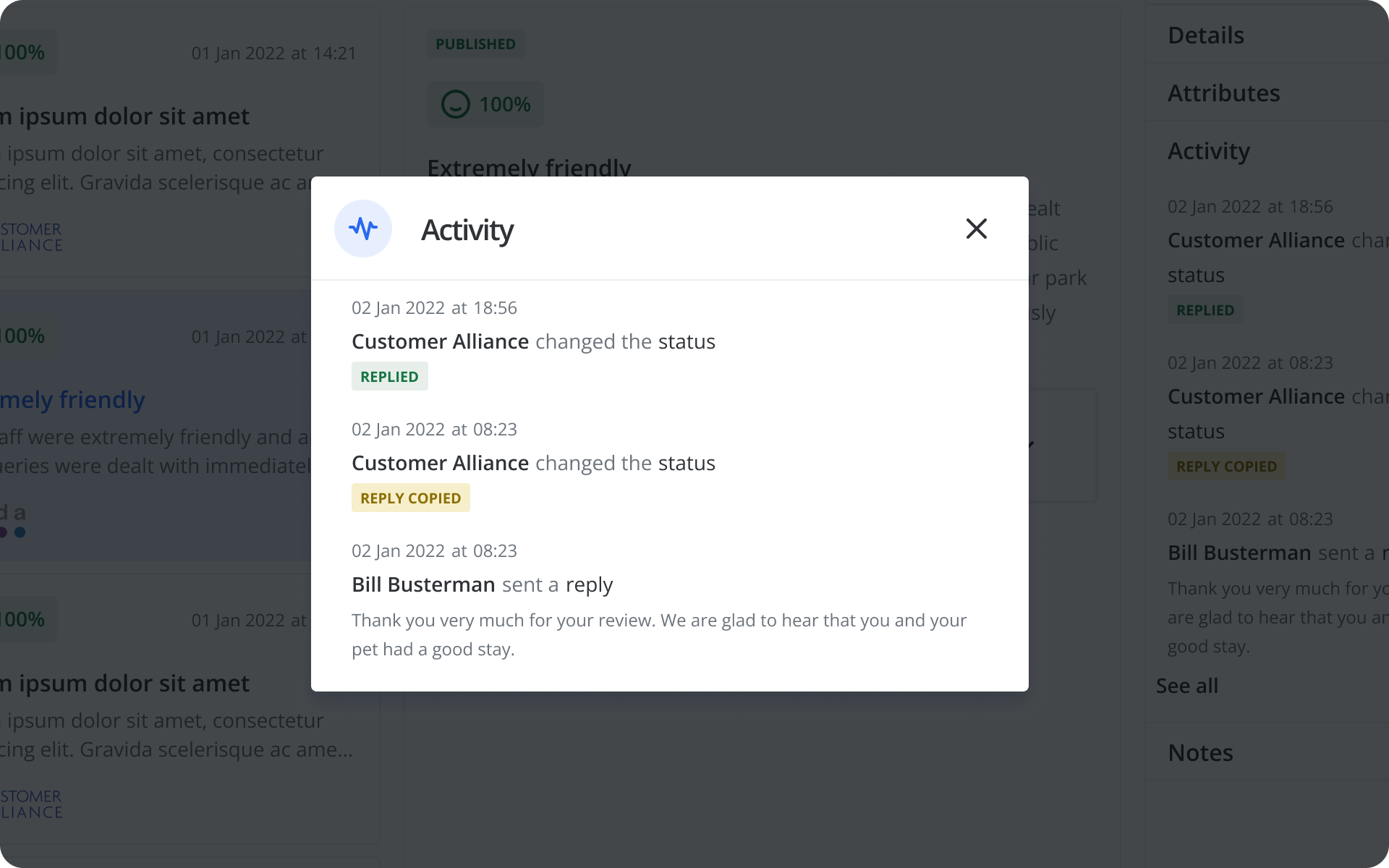
The issue we heard most often from our users was that they were unable to know the status of a review. Did a colleague already reply to the review or did they just draft it? What did they reply? When did a note get added?
I created an activity stream where people can see everything that happened with a review, collaborated with the PM and QA teams to define more accurate and easier to understand statuses, and improved sharing specific reviews with other users on the platform.
Outcome
Our goal was to create a usable, personalised, and collaborative hub for our customers, while enabling modular and incremental feature improvements for years to come. The engineering team built and released the new Review Stream to a beta audience in the first quarter of 2023. And in Q2/23 we opened up the beta to all of our customers.
During the beta phase we integrated a banner into the page, allowing people to switch between the old and new versions. They were also able to provide feedback, including CSAT. Within the first 2 weeks, we reached 15% adoption rates and 75% satisfaction, and using this feedback, we were able to continuously iterate on the feature through the end of 2023. At the start of 2024 we had reached 80% adoption and were able to turn off the old version, removing complexity and simplifying the code base, a first for the company.
With the old version completely removed, customers are now rating the new version consistently above 90%.